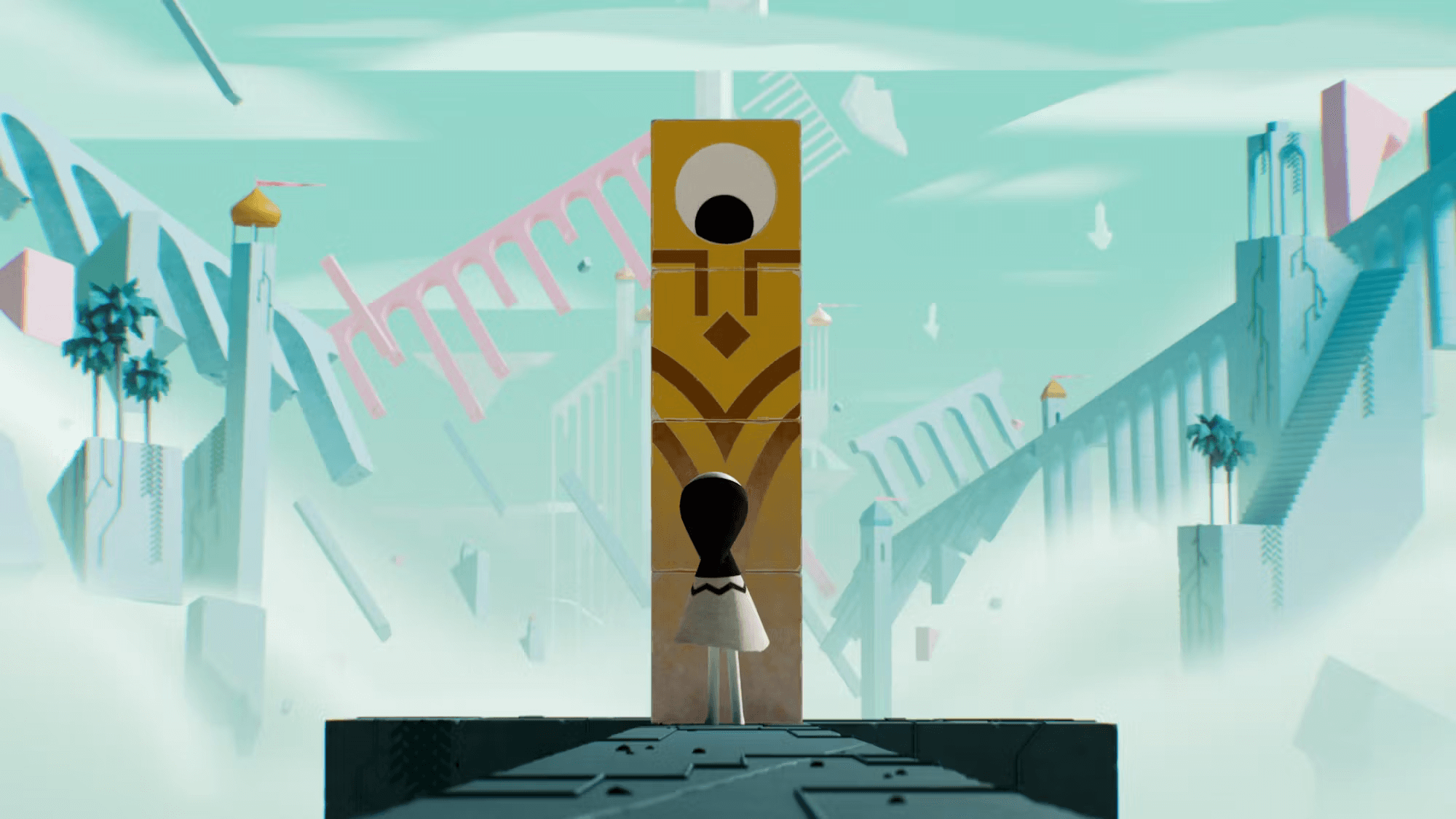

How Many Levels Are There in Monument Valley 3? Complete Chapter Guide
Monument Valley 3 continues the beloved series' tradition of breathtaking architecture and mind-bending puzzles. As Noor embarks on her journey to restore light to a fading world, players will traverse through 11 beautifully crafted chapters, each offering unique challenges and stunning visual experiences.
The Complete Journey: 11 Chapters
Monument Valley 3 features 11 distinct chapters, including the base game and The Garden of Life expansion. Each chapter builds upon the previous one, introducing new mechanics while maintaining the series' signature impossible geometry and optical illusions.
Chapter 1: Prelude
The journey begins as Noor discovers the world's light is fading and water levels are rising. Her mentor delivers a cryptic message: "Our time together ends soon... The Lightwell beckons," setting the stage for an emotional adventure. This opening chapter serves as both a narrative introduction and a gentle tutorial, easing players into the game's unique visual language and puzzle philosophy. The Prelude introduces core gameplay mechanics through mind-bending optical illusions and impossible geometry that the series is famous for. Players learn fundamental interactions like stepping on pressure plates to open doors, sailing to marked locations indicated by exclamation points, and harvesting light from budding flowers—a mechanic that becomes central to the entire game. The chapter guides you through manipulating architecture and environments to reveal hidden paths, teaching you to see beyond what seems possible. Visually, the Prelude establishes the game's stunning aesthetic with soft pastels and dreamlike architecture. The rising waters create a sense of urgency while the fading light adds melancholy to Noor's world. It's a perfect introduction that balances storytelling, tutorial elements, and the series' signature impossible architecture, preparing players for the increasingly complex puzzles ahead.
Chapter 2: The Town
Following her mentor's instructions from the Prelude, Noor arrives in the town area to witness firsthand the devastating effects of the fading light and rising water levels. The town serves as a hub that introduces players to the game's central themes and the urgency of Noor's mission. The architecture here is more complex than the Prelude, with multiple levels and interconnected structures that require careful observation to navigate. This chapter builds significantly on the tutorial elements by introducing draggers—sliding mechanisms that allow you to manipulate entire sections of architecture. Players must engage with increasingly sophisticated optical illusions to forge seemingly impossible paths through the town's structures. The puzzles require you to think in multiple dimensions, rotating your perspective to see how different architectural elements align to create walkable paths. The ultimate goal is to navigate through the town and reach the lighthouse, which plays a critical role in both the narrative and puzzle design throughout the game. The Town chapter strikes a perfect balance between teaching new mechanics and challenging players to apply what they learned in the Prelude, while the visual storytelling shows the real consequences of the world's fading light on its inhabitants.
Chapter 3: The Hidden Fens
The Hidden Fens marks Noor's first true voyage of discovery away from her home village, representing a significant milestone in both the narrative and gameplay complexity. This chapter takes players into mysterious wetlands filled with ancient structures half-submerged in water, creating an atmosphere of exploration and wonder. The environmental storytelling here is particularly strong, with the fens feeling like a forgotten place holding secrets from a bygone era. The puzzles in this chapter introduce new environmental mechanics that take advantage of the wetland setting. Players must navigate through water-based obstacles and manipulate architecture that interacts with the rising and falling water levels. The chapter requires careful observation of how structures relate to each other across the misty landscape, often requiring you to create paths by aligning distant architectural elements through perspective shifts. Visually, The Hidden Fens is one of the most atmospheric chapters in the game, with fog-shrouded structures and reflective water surfaces that add depth to the impossible geometry. The sense of isolation and discovery makes this chapter memorable, as Noor ventures further from home into unknown territory. It's a pivotal chapter that demonstrates the game's ability to blend environmental storytelling with increasingly sophisticated puzzle design.
Chapter 4: Origata Atelier
Origata Atelier introduces one of the game's most innovative and delightful puzzle mechanics—paper-folding inspired architecture. The name "Origata" refers to the Japanese art of ceremonial paper folding, and this chapter brilliantly translates that concept into three-dimensional puzzle design. As Noor continues her journey, she encounters structures that can be manipulated as if they were sheets of paper, folding and unfolding to create new pathways and reveal hidden routes. The puzzles here challenge players to think about architecture in an entirely new way, with sections of buildings that fold along invisible creases to connect previously separate areas. The mechanic feels intuitive yet mind-bending—you'll find yourself folding corners of structures to create bridges, or unfolding walls to reveal staircases. This chapter requires spatial reasoning skills as you visualize how flat surfaces transform into walkable three-dimensional paths. Visually, the Origata Atelier is crisp and geometric, with clean lines and sharp angles that emphasize the paper-folding aesthetic. The color palette shifts to include more vibrant hues, making the folding mechanics visually clear and satisfying. This chapter stands out as one of the most creative in the game, showcasing how Monument Valley 3 continues to innovate on the series' core concepts while introducing fresh ideas that feel both novel and perfectly integrated into the game's world.
Chapter 5: The Temple
The Temple represents the most significant turning point in Monument Valley 3's narrative, delivering an emotional gut-punch that transforms Noor's journey from a guided mission into a solo quest. Noor and her mentor arrive at an ancient temple to retrieve the light needed for the Lighthouse, but their plan goes catastrophically wrong. The light splinters and turns an ominous red, and the temple begins to crumble around them in a dramatic sequence that showcases the game's ability to blend gameplay with cinematic storytelling. In the chaos of the collapsing temple, Noor's mentor makes the ultimate sacrifice, staying behind to ensure Noor can escape. In a poignant moment, the mentor passes their staff to Noor, symbolizing the transfer of responsibility and the end of Noor's apprenticeship. From this moment forward, Noor must continue the mission alone, carrying the weight of her mentor's sacrifice and the hope of restoring light to the world. The emotional impact of this chapter resonates throughout the rest of the game. Gameplay-wise, The Temple features some of the most complex puzzles yet, with crumbling architecture that adds urgency to the puzzle-solving. The red-tinted light creates a visually striking and unsettling atmosphere, contrasting sharply with the warm, hopeful tones of earlier chapters. This chapter is essential viewing for anyone wanting to understand Monument Valley 3's narrative depth, as it marks the transition from tutorial-style guidance to true independence, both for Noor as a character and for players mastering the game's mechanics.
Chapter 6: Vaiaku
Following the devastating events at The Temple, Noor arrives in Vaiaku, a coastal town that has been severely damaged by rough waters and the ongoing crisis. Now alone and carrying her mentor's staff, Noor must find a new approach to her mission. The town's architecture reflects the damage it has sustained, with partially submerged buildings and displaced residents creating a sense of urgency and purpose for Noor's quest. This chapter shifts focus from grand architectural puzzles to more intimate, community-focused gameplay. Players guide Noor through the damaged town to rescue stranded townspeople, adding a humanitarian element to the puzzle-solving. More importantly, Vaiaku is where Noor makes a crucial discovery—flowers contain a natural light source that can serve as an alternative to the splintered temple light. This revelation becomes the key to restoring the lighthouse and offers renewed hope after the tragedy of Chapter 5. The puzzles in Vaiaku blend water-based environmental challenges with the need to navigate damaged structures to reach trapped residents. The discovery of light within flowers introduces a gentler, more organic approach to solving the world's crisis, suggesting that sometimes the solution lies in nature rather than ancient temples. Visually, the chapter balances the destruction of the storm-damaged town with the hopeful glow of the newly discovered flower light, creating a turning point where despair gives way to renewed determination.
Chapter 7: The Torrential Parting
The Torrential Parting continues Noor's mission to find new light sources while dealing with the aftermath of the catastrophic water damage affecting Vaiaku. The chapter's title refers to both the literal parting of land by torrential waters and the metaphorical separation of communities by the crisis. This chapter represents some of the most challenging water-based puzzles in the game, requiring players to think carefully about how water levels, architecture, and perspective interact. The gameplay focuses on navigating landscapes that have been dramatically altered by flooding, with structures split apart by rushing waters. Players must manipulate architecture to bridge these gaps while simultaneously rescuing stranded townsfolk from Vaiaku. The puzzles require precise timing and spatial awareness as you work with moving water, shifting platforms, and the ever-present need to harvest light from flowers. The difficulty ramps up significantly here, testing everything players have learned so far. Visually, The Torrential Parting is dramatic and dynamic, with rushing water creating a sense of movement and urgency throughout the chapter. The contrast between the destructive power of water and the gentle, hopeful light of flowers reinforces the game's themes of finding beauty and solutions even in crisis. This chapter showcases Monument Valley 3 at its most challenging, combining complex environmental puzzles with the emotional weight of helping a community in distress.
Chapter 8: The Inverted Palace
The Inverted Palace stands as one of Monument Valley 3's most visually spectacular and conceptually ambitious chapters. This level takes the series' signature impossible geometry to new heights—or depths—by featuring architecture that exists simultaneously right-side-up and upside-down. Players must navigate through a palace where gravity seems to be merely a suggestion, with Noor walking on ceilings, walls, and floors that shift perspective as you rotate the structure. The puzzles here require a complete rethinking of spatial relationships. What appears to be a ceiling from one angle becomes a floor from another, and pathways that seem impossible suddenly align when you rotate your view. The chapter introduces mechanics where Noor can walk on inverted surfaces, creating M.C. Escher-like scenarios where up and down lose their meaning. Players must carefully manipulate the palace's architecture, using draggers and rotation to create paths that defy conventional physics. Visually, The Inverted Palace is breathtaking, with symmetrical architecture that mirrors itself across horizontal planes. The color palette features rich purples and deep blues, creating an otherworldly atmosphere that emphasizes the surreal nature of the space. This chapter represents the pinnacle of Monument Valley's core concept—impossible architecture that somehow makes perfect sense within the game's logic. It's a showcase of creative puzzle design that will leave players questioning which way is truly up.
Chapter 9: The Meadow
After the intense architectural challenges of The Inverted Palace, The Meadow offers a welcome change of pace with its serene, pastoral setting. Noor travels through expansive grassy landscapes dotted with wildflowers, creating a contemplative atmosphere that allows both the character and player to breathe. This chapter introduces the Nomad, a mysterious figure who adds depth to the game's lore and provides Noor with guidance on her journey. The gameplay in The Meadow focuses heavily on the flower-harvesting mechanic discovered in Vaiaku, making it central to progression rather than just a side activity. Players explore rolling hills and meadows, seeking out flowers that contain the natural light needed to restore the world. The puzzles are gentler here, emphasizing exploration and discovery over complex architectural manipulation. This chapter reinforces the game's themes of finding hope in nature and the idea that renewal comes from organic, living sources rather than ancient structures. Visually, The Meadow is a breath of fresh air with its open spaces, vibrant greens, and colorful wildflowers swaying in the breeze. The meeting with the Nomad adds a sense of connection and community to Noor's solo journey, reminding players that even in isolation, there are others working toward the same goals. This chapter serves as a peaceful interlude before the final push toward the game's conclusion, offering both narrative reflection and visual beauty.
Chapter 10: Sub Rosa
Sub Rosa serves as the powerful conclusion to Monument Valley 3's main storyline, bringing Noor's journey full circle in an emotionally satisfying finale. The chapter's title, Latin for "under the rose," carries deep symbolic meaning—referring to something kept secret or private, which perfectly captures the revelation that the solution to the world's crisis was hidden within nature all along. This chapter represents the culmination of everything Noor has learned since her mentor's sacrifice at The Temple. The gameplay brings together all the mechanics and lessons from previous chapters as Noor finally gathers enough natural light from flowers to restore the Lighthouse and save the Town. The puzzles feel like a final exam, testing your mastery of perspective shifts, architectural manipulation, and environmental awareness. The chapter builds to a climactic moment where the Lighthouse is restored, its beam cutting through the darkness and bringing hope back to the world. It's a triumphant moment that validates Noor's solo journey and her mentor's faith in her. Visually and emotionally, Sub Rosa delivers a powerful payoff. The restoration of light transforms the environment, with warm, golden tones replacing the cold blues and grays of earlier chapters. Seeing the Town and Lighthouse restored provides a sense of accomplishment and closure. The chapter proves that sometimes the greatest power lies not in ancient temples or grand structures, but in the simple, natural beauty of flowers—a message about finding hope and solutions in unexpected places. It's a fitting end to the main narrative that honors both Noor's growth and her mentor's legacy.
Chapter 11: The Garden of Life
The Garden of Life is part of a free post-game expansion that extends Noor's story beyond the main narrative's conclusion, offering players four additional chapters of content. This expansion shifts focus from the urgent mission to restore light to a more contemplative exploration of what comes after—how communities rebuild, grow, and thrive once the immediate crisis has passed. It's a generous addition that deepens the game's themes of renewal and community. The gameplay in this expansion emphasizes helping to grow and nurture a village, creating a more relaxed, exploration-focused experience compared to the main story's urgency. Players form emotional bonds with community members, witnessing how the restored light enables life to flourish. The expansion includes hidden optional puzzles scattered throughout, rewarding curious players who take time to explore every corner of the environment. These puzzles feel less like obstacles and more like delightful discoveries, adding replay value and encouraging thorough exploration. The Garden of Life represents Monument Valley 3's commitment to showing the full arc of recovery and renewal. While the main story focuses on solving the crisis, this expansion explores the equally important work of building something new from the ashes. Visually, it's lush and vibrant, filled with growing plants, thriving communities, and the warm light that Noor worked so hard to restore. It's a beautiful epilogue that transforms the game from a story about saving the world into a story about what makes a world worth saving—connection, community, and the simple joy of watching life flourish.
Your Journey Awaits
Each of Monument Valley 3's 11 chapters offers a unique blend of storytelling, puzzle-solving, and visual artistry. From the introductory Prelude to the expansive Garden of Life, every level contributes to an unforgettable experience.
Want to see these chapters in action? We highly recommend watching our detailed video walkthroughs for Chapter 3: The Hidden Fens and Chapter 5: The Temple. These pivotal chapters showcase the game's most innovative puzzles and dramatic story moments.