
Is Monument Valley 3 Graphically Impressive? A Visual Masterpiece
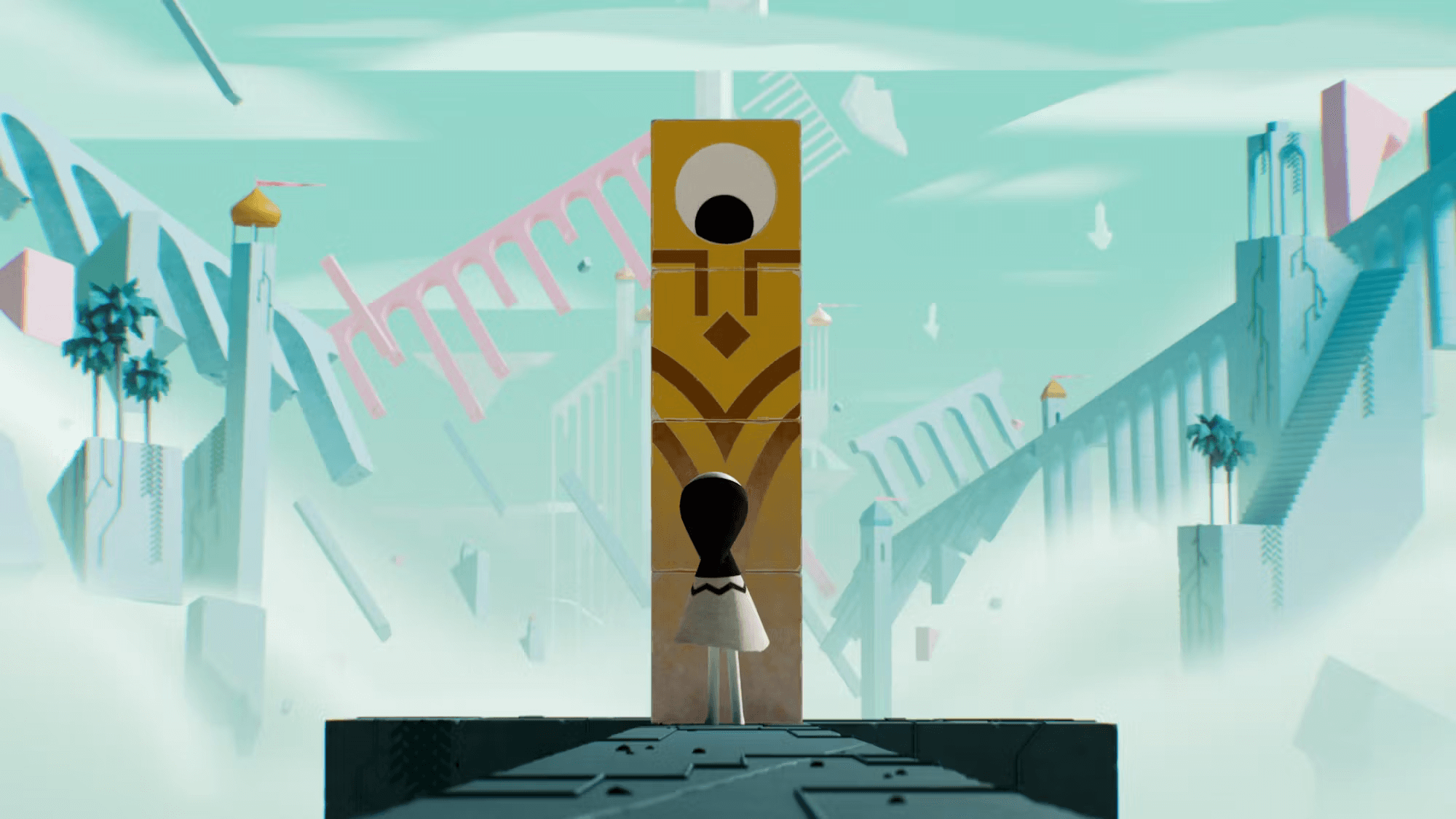
Monument Valley 3's visuals are undeniably the strongest point of the game. Everything is incredibly detailed, from the meticulously crafted characters to the breathtaking world design. Looking out at the vast ocean is something you'll find yourself doing repeatedly when you start playing—not because the game requires it, but because the view is simply too beautiful to ignore.
World-Class Designers, World-Class Visuals
Behind Monument Valley 3's stunning aesthetics stands a team of top-tier designers who have elevated mobile gaming to an art form. These visual architects haven't just created a game—they've crafted an interactive gallery where every frame could be a museum piece. The level of craftsmanship is immediately apparent from the moment you launch the game.
The design philosophy draws from multiple artistic traditions: the geometric precision of M.C. Escher, the color theory of Josef Albers, the minimalist elegance of Japanese architecture, and the intricate patterns of Islamic art. This fusion creates a visual language that feels both timeless and contemporary, familiar yet utterly unique.
What sets Monument Valley 3 apart is the attention to micro-details. Shadows shift realistically as structures rotate. Water reflects the sky with subtle gradations. Even the smallest architectural elements—a carved column, a decorative archway, a patterned tile—receive the same meticulous attention as the grand vistas. This commitment to detail creates a world that feels alive and tangible despite its impossible geometry.
Lines That Dance in Your Mind
The linework in Monument Valley 3 is nothing short of extraordinary. Every edge, every contour, every architectural element is rendered with mathematical precision yet artistic grace. The game employs clean, confident lines that guide your eye naturally through each puzzle, creating visual pathways that are as functional as they are beautiful.
These aren't just static lines—they're dynamic elements that transform as you interact with the world. Rotate a structure, and watch how the lines create new relationships, new patterns, new possibilities. The designers understand that in a game about impossible architecture, the lines themselves must be performers in this visual symphony.
The interplay between thick and thin lines creates depth and hierarchy. Bold outlines define major structures, while delicate details add texture and interest. This variation keeps the visual experience rich without overwhelming the player. Even after hours of gameplay, you'll discover new line relationships, new patterns you hadn't noticed before—a testament to the layered complexity of the design.
Extraordinary Color Palettes
Each chapter introduces a distinct color story. One moment you're navigating through warm terracottas and sun-bleached whites reminiscent of Mediterranean architecture. The next, you're immersed in cool blues and purples that evoke twilight mysteries. Then suddenly, vibrant corals and teals transport you to a dreamlike tropical paradise.
The color transitions are masterfully executed. As you progress through a level, the palette subtly shifts—a sunrise gradually warming the scene, or dusk slowly cooling the atmosphere. These transitions aren't just decorative; they provide emotional cues, guiding your feelings as you solve puzzles. The colors tell a story parallel to the gameplay, creating a multisensory narrative experience.
Impossible 3D Effects That Defy Reality
Monument Valley 3's greatest visual achievement is its impossible geometry—3D structures that couldn't exist in our physical world but feel completely natural within the game. Staircases that loop back on themselves, towers that connect at angles that defy physics, pathways that exist in multiple planes simultaneously—these aren't glitches or errors, but carefully designed visual paradoxes.
The game employs forced perspective and optical illusions with masterful precision. What appears to be a gap becomes a bridge when viewed from the right angle. A distant platform suddenly connects to your current position through a clever rotation. These effects aren't just puzzle mechanics—they're visual poetry that challenges your perception of space and dimension.
The 3D rendering maintains perfect clarity despite the complexity. Even when structures overlap and intersect in impossible ways, you always understand where you are and where you can go. This clarity is crucial—it allows the designers to create increasingly complex visual puzzles without sacrificing usability. The result is a game that's simultaneously mind-bending and intuitive.
A Visual Experience That Lingers
Playing Monument Valley 3 is like walking through a living painting. Long after you've put down your device, the images linger in your mind—those perfect color combinations, those elegant lines, those impossible structures that somehow made perfect sense. This visual persistence is rare in gaming and speaks to the power of the game's aesthetic design.
The game proves that mobile gaming can deliver visual experiences that rival any medium. These aren't compromised graphics scaled down for smaller screens—this is art designed specifically for the intimate, tactile experience of mobile devices. The visuals take full advantage of modern display technology, with colors that pop on OLED screens and details that reward close examination.
Monument Valley 3 sets a new benchmark for visual design in gaming. It demonstrates that graphics aren't just about polygon counts or realistic textures—they're about artistic vision, thoughtful design, and the courage to create something truly unique. Every screenshot is wallpaper-worthy, every moment is visually memorable, and every puzzle is a masterclass in aesthetic design.
Explore More About Monument Valley 3
Discover more insights and guides: